Ethereum: Retention Dynamics
Published: 2026-02-24
Abstract
This study presents a data-driven exploration of developer retention within the Ethereum ecosystem. Using Electric Capital’s repository to map the ecosystem, we compiled a database of Ethereum-centric developer activity, anchoring open-source github data to macro-level dynamics governing the developer community’s evolution. The study introduces a lifecycle-based framework in which each developer is classified by tenure since their first Ethereum-specific contribution, enabling retention and productivity metrics to be measured consistently across heterogeneous cohorts.
Developer activity is examined over rolling time windows, with lifecycle status assigned at the time of each commit to distinguish newcomers, emerging contributors, and established developers without survivorship bias. We analyze collaboration networks and repository category mixing to understand how contributor overlap and project structure relate to retention outcomes.
Our findings provide a quantitative perspective on developer engagement, cross-project transitions, and the correlation between broader crypto cycles and activity dynamics. The framework is designed to be reproducible and extensible, serving as a foundation for monitoring ongoing ecosystem health.
Intro
Open blockchain ecosystems rely on sustained developer participation. Unlike traditional software platforms, public networks evolve through highly distributed, multi-organizational efforts. As a result, developer retention is a core determinant of ecosystem resilience and long-term sustainability. Ethereum represents the largest, most active smart contract ecosystem, supporting a diverse landscape of applications, clients, infrastructure providers, developer tooling, and research initiatives.
Most existing research in this domain emphasizes surface-level indicators such as commit counts and perhaps, cumulative repository growth. Systemic measurement of retention, lifecycle progression, and mobility remains mostly unexplored. This creates a gap between widely cited ecosystem growth metrics and the underlying dynamics of long-term technical development.
This report addresses the measurement gap by providing a structured analysis of Ethereum developer retention. We move beyond trivial activity counts by examining monthly cohort retention, productivity-tenure relationships, and collaboration dynamics to understand how engagement persists or decays across cycles. This study introduces a reproducible framework for ecosystem health assessment that, while focused on Ethereum, is generalizable to other open-source environments, establishing a foundation for future exploration.
Developer-Driven Growth
The correlation between Ethereum TVL and baseline developer metrics reveals the link between technical activity and economic value. As shown in the figures below, developer participation closely tracks Ethereum’s economic expansion over time, with rudimentary analysis confirming significant positive correlations between TVL and both committer counts (r = 0.431, p = 0.0002) and total commits (r = 0.453, p = 0.0001).
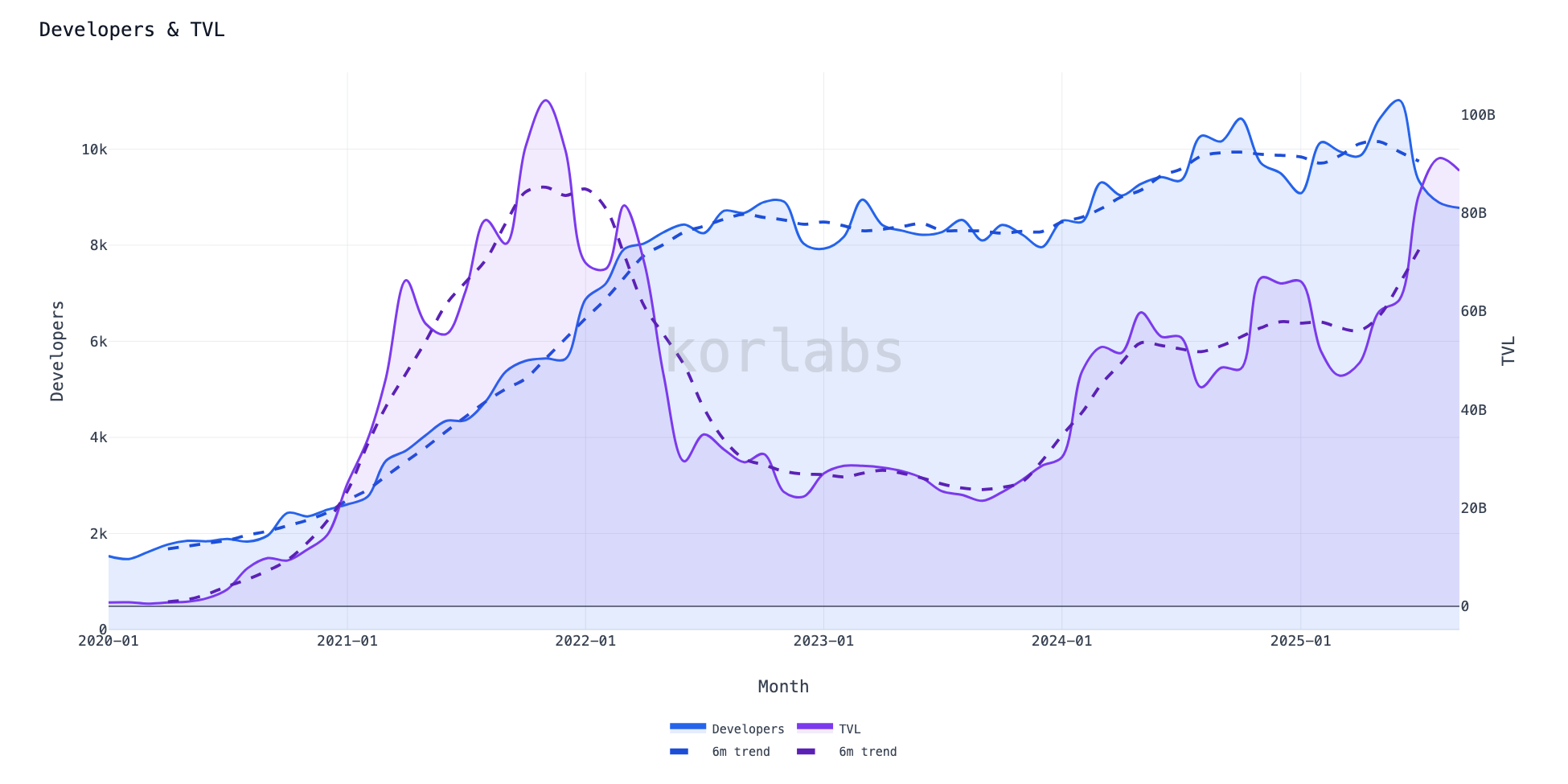
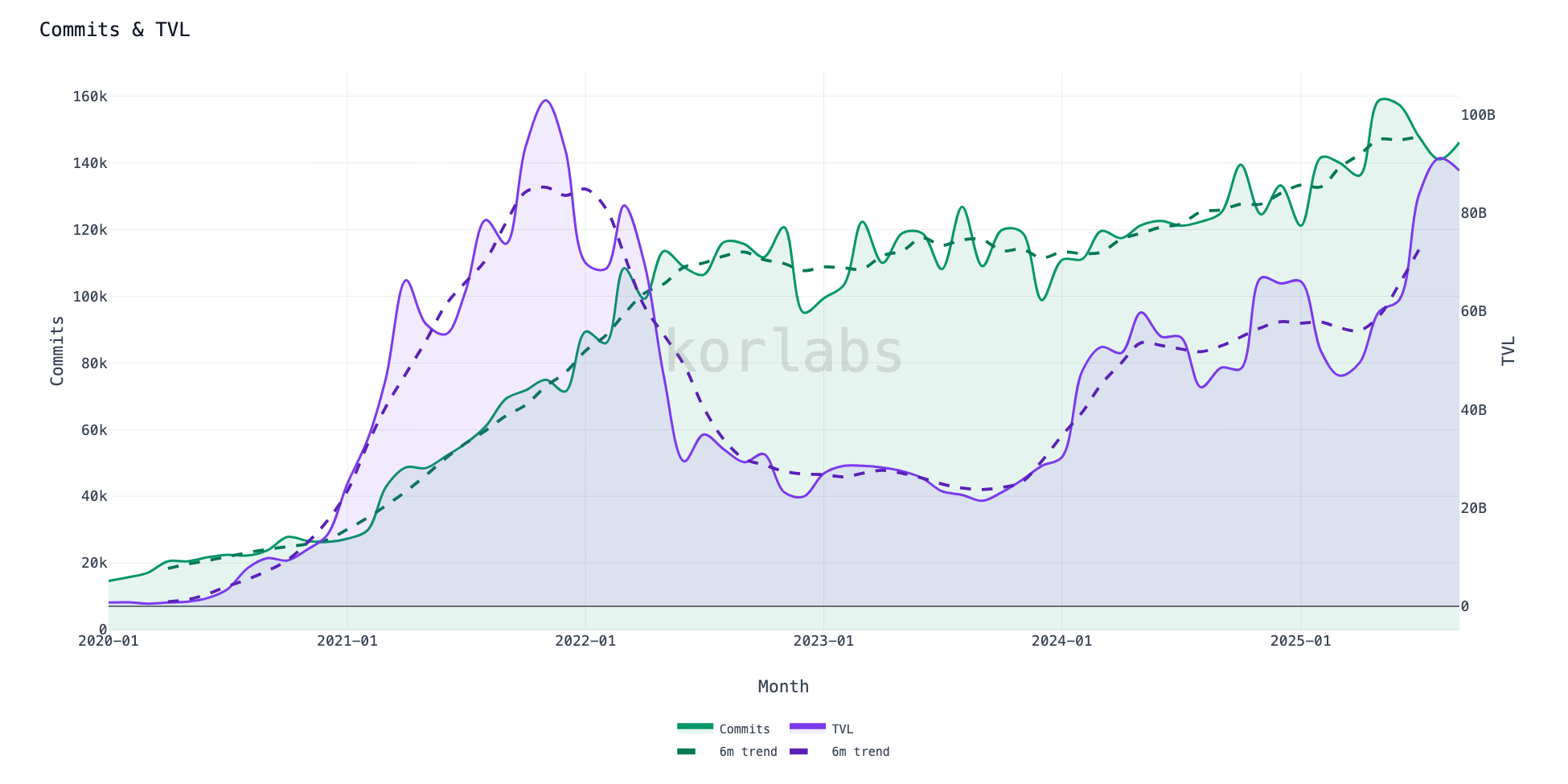
While these dynamics do not imply a direct causality, the foundational argument that developer activity drives ecosystem growth holds strong. Given that developer activity is a macro-level aggregate of individual micro-level agents the expansion and retention of the developer base emerge as leading indicators of ecosystem sustainability and strong predictors of growth.
Measuring developer maturity through tenure within the Ethereum ecosystem provides a meaningful lens for interpreting contribution dynamics and identifying the developer profiles most closely associated with ecosystem growth.
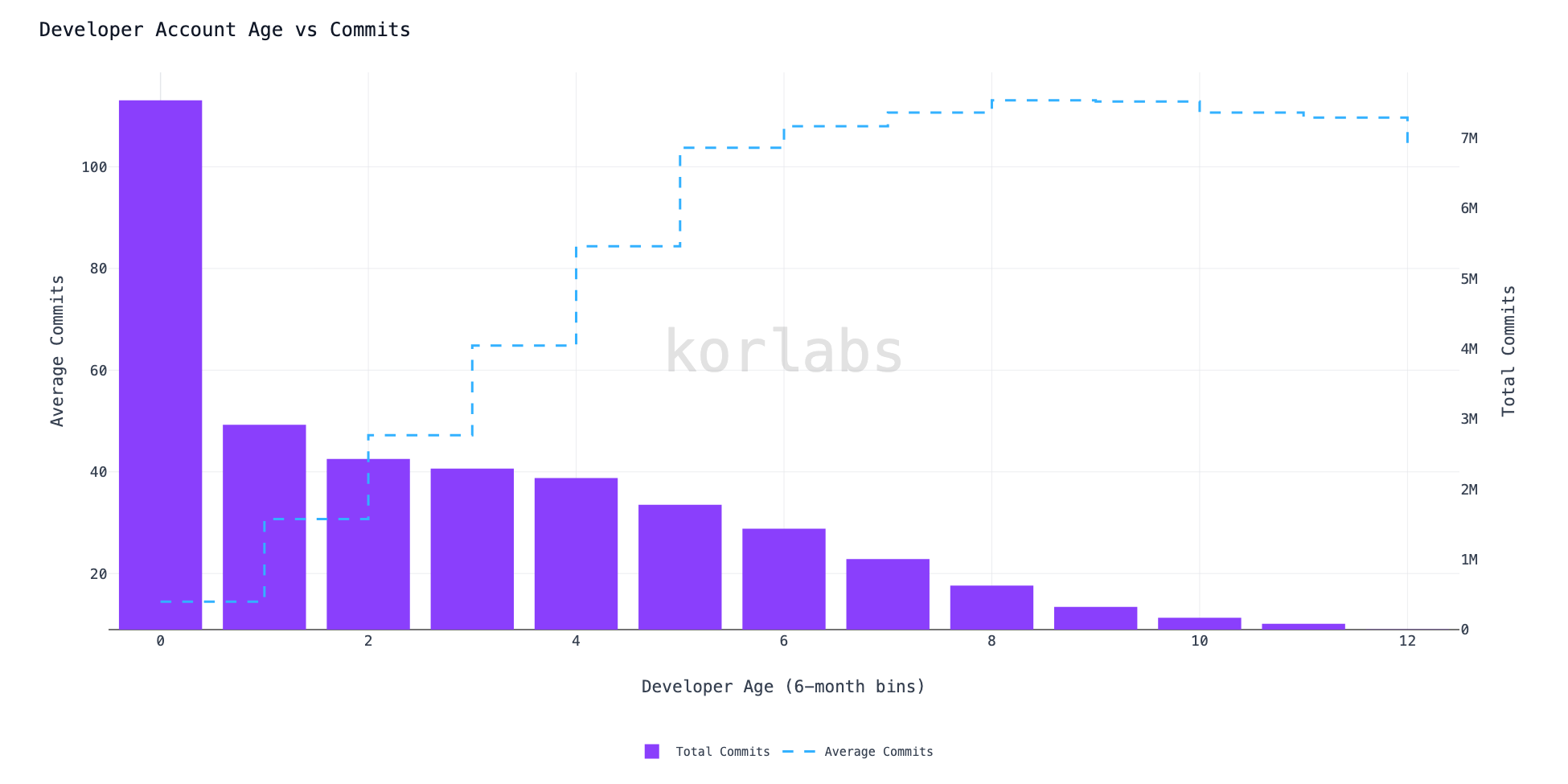
While accounts with less than a year experience drive over 50% of commits, they exhibit the lowest average contribution metrics. As such we argue that while ecosystem expansion appears to be inflow-driven in aggregate terms, long-term capacity is primarily driven by high retention:developers who persist become structurally more productive and amplify output over time. Growth is therefore not only a function of entry, but of progression into durable, high-contribution roles. Retention becomes the key variable, determining whether newcomers compound into sustained technical capacity or dissipate after early participation.
Contributor Segmentation
To ground the retention analysis in observable behavior, a snapshot of active Ethereum developers is constructed and segmented by experience level. Rather than assigning static labels, developer categories are defined dynamically according to the time elapsed since each developer’s first recorded Ethereum commit. This tenure is measured at the time of each observed contribution, ensuring that classification reflects actual experience within the ecosystem. Tenure was selected as the relevant metric due to a lack of more informative alternatives; for instance, relying on account age is often insufficient in open-source research, as a contributor’s GitHub profile may predate their entry into the Ethereum ecosystem by several years. Defining tenure dynamically avoids this misalignment and mitigates survivorship bias by accurately reflecting the developer's lifecycle status at each contribution.
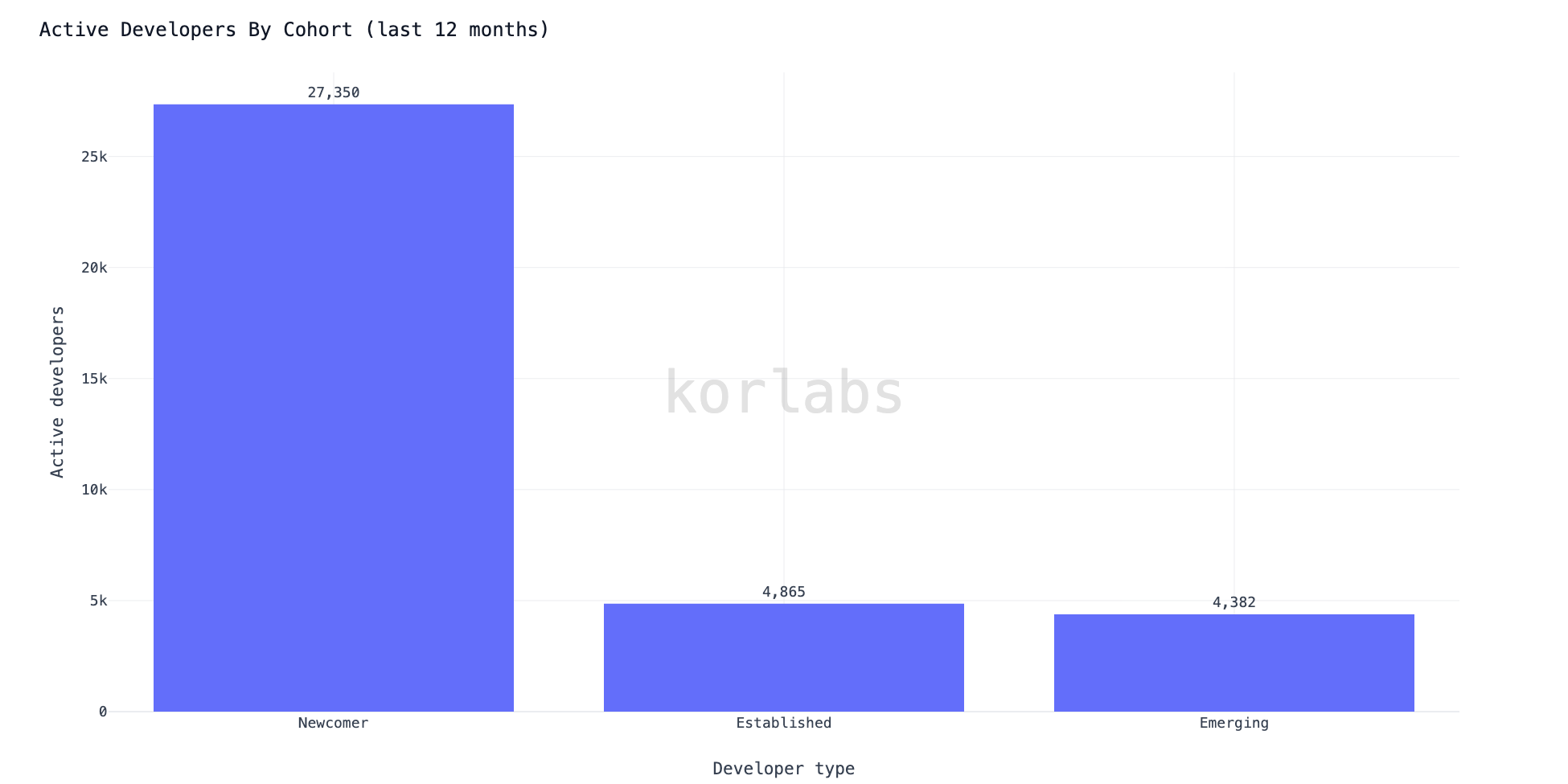
Across three distinct cohorts, Newcomers (<1.5 years tenure), Emerging Developers (1.5-3 years tenure), and Established Developers (>3 years tenure), a clear pattern emerges: while recent entrants constitute the majority of active contributors, signalling consistent talent inflow, Ethereum still retains a meaningfully sticky core of long-term participants.
Retention
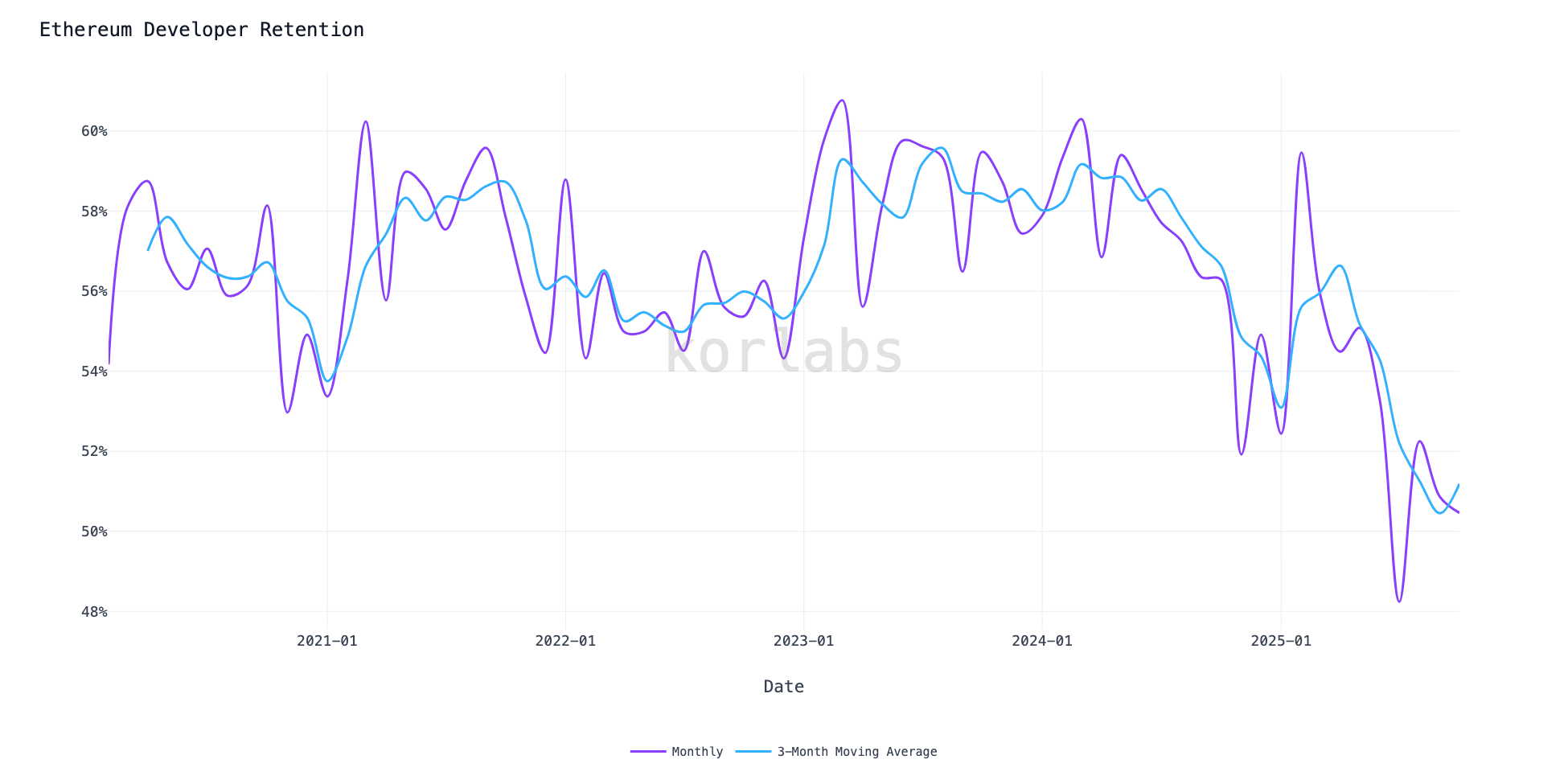
To capture the evolving nature of developer participation, the analysis shifts from point-in-time aggregates to temporal retention trajectories. Using commit-level histories, monthly retention metrics are constructed to trace how ecosystem-wide persistence evolves over time. The data reveals that Ethereum has maintained relatively high developer retention, averaging roughly 56% over the analyzed period and remaining near 50% in recent observations. Given the voluntary and decentralized nature of the system, these figures present a remarkably strong signal of network health.
Retention by Developer Maturity
To identify structural differences in persistence, retention is segmented by developer maturity. However, since developer categories are assigned dynamically based on tenure, emerging and established cohorts only enter the analysis once sufficient time has elapsed for participants to satisfy the classification thresholds. Furthermore, as our dataset begins in January 2022, their absence in the early stages of the observation window reflects both the underlying classification logic and the temporal limits of the dataset.
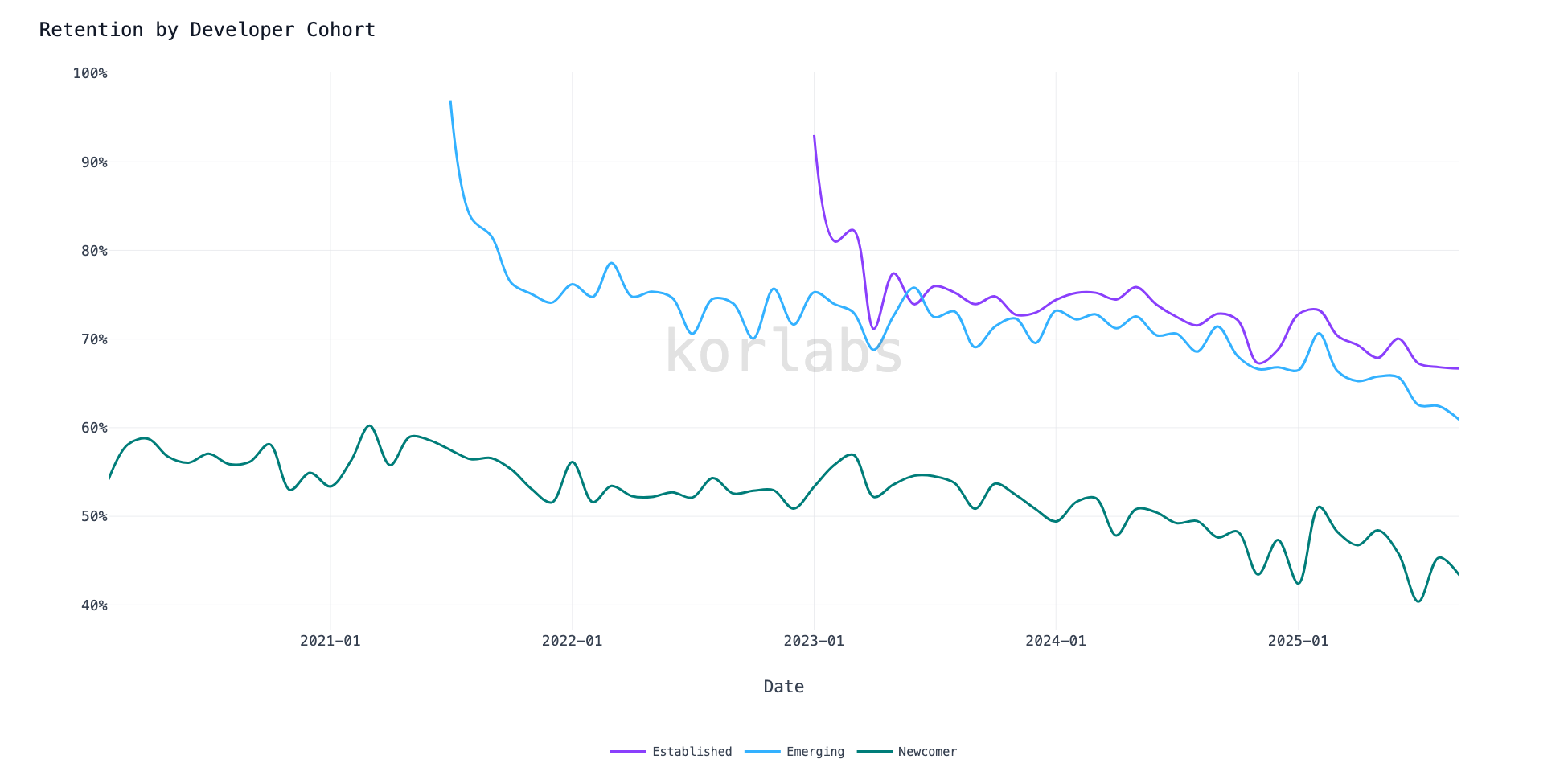
Segmenting retention by developer maturity reveals a consistent gradient of persistence across tenure cohorts. Newcomers exhibit the lowest monthly retention rates and the steepest downward drift over time. Although the probability of exit declines with each additional period of continued activity, indicating that conditional survival improves with tenure, the early lifecycle stage remains the most fragile. Emerging developers demonstrate materially stronger stability once they pass the 1.5-year threshold, suggesting that they have crossed a critical commitment barrier. While their likelihood of exit continues to decline thereafter, the most pronounced transition occurs between the newcomer and emerging stages. Established contributors form the most resilient segment, maintaining the highest and most stable retention rates throughout the observation window. At this stage, ecosystem attachment appears more durable and less sensitive to short-term volatility, with multi-year tenure serving as a primary predictor of persistence independent of temporary market cycles.
Retention by Expressed Publicity
To further examine the structural correlates of developer persistence, the analysis evaluates whether self-disclosed social identity markers in GitHub profiles (e.g., a public X handle) are associated with differentiated retention outcomes.
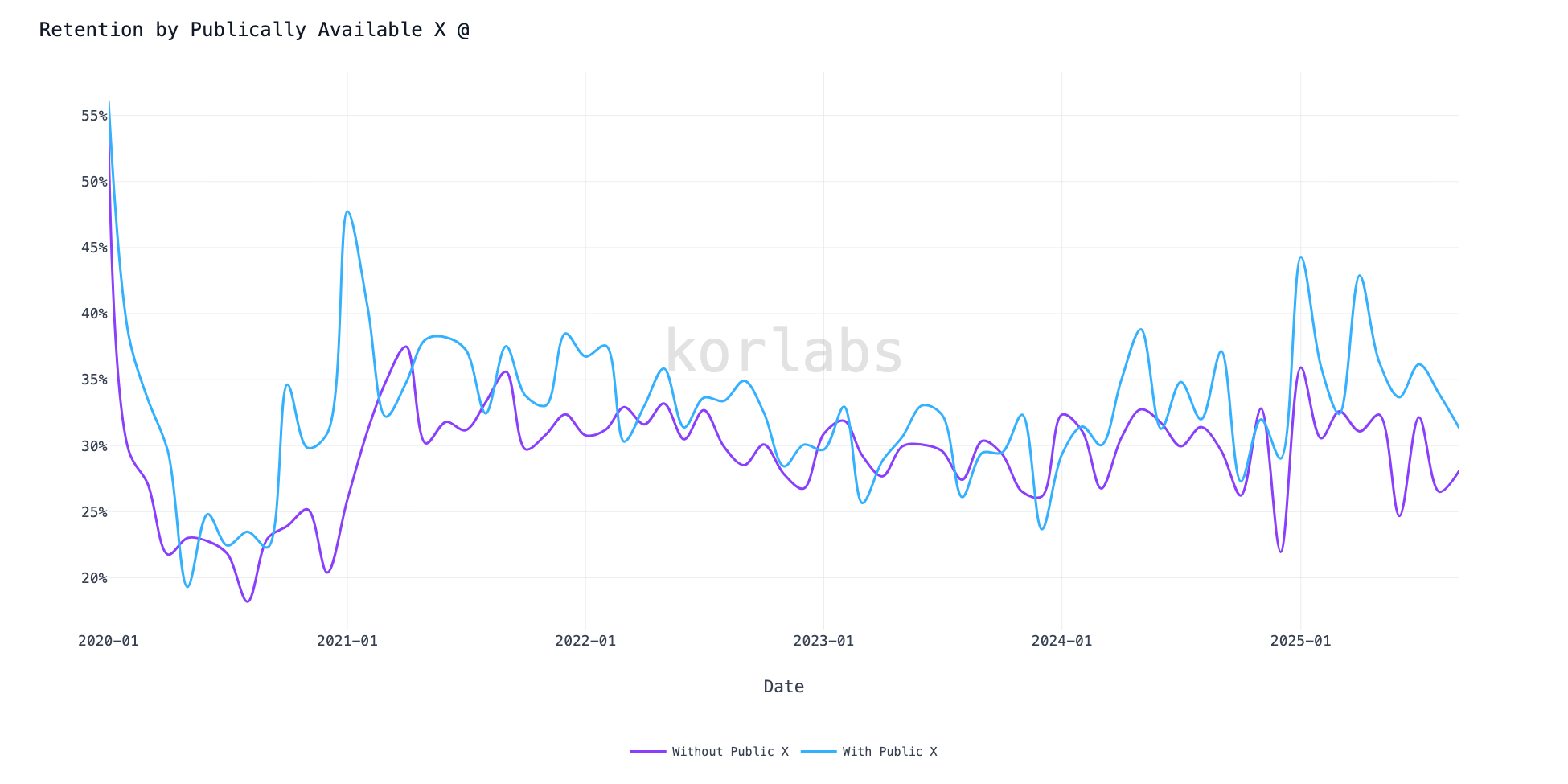
A consistent pattern emerges: developers who publicly link an X (Twitter) profile exhibit consistently higher retention rates across most observed periods. While the gap is moderate, it remains stable over time, indicating a systematic association rather than short-term fluctuation. This pattern suggests that publicly visible developers may be more deeply embedded within the ecosystem, with visibility serving as a proxy for stronger professional alignment, reputational incentives, and community integration rather than acting as a direct causal mechanism. The result reinforces the broader claim that persistence correlates not only with technical tenure but also with social embeddedness, highlighting community integration as a structural component of developer durability.
Ecosystem Evolution
Because lifecycle status is evaluated at the time of each commit, temporal shifts in cohort shares reflect both behavioral variation and progression. An increase in the share of established developers, for example, signals successful medium-term retention and developer maturation rather than short-term fluctuations in activity alone. From a structural perspective, ecosystem output is jointly supported by continuous newcomer inflow and the durable productivity of retained, higher-tenure contributors.
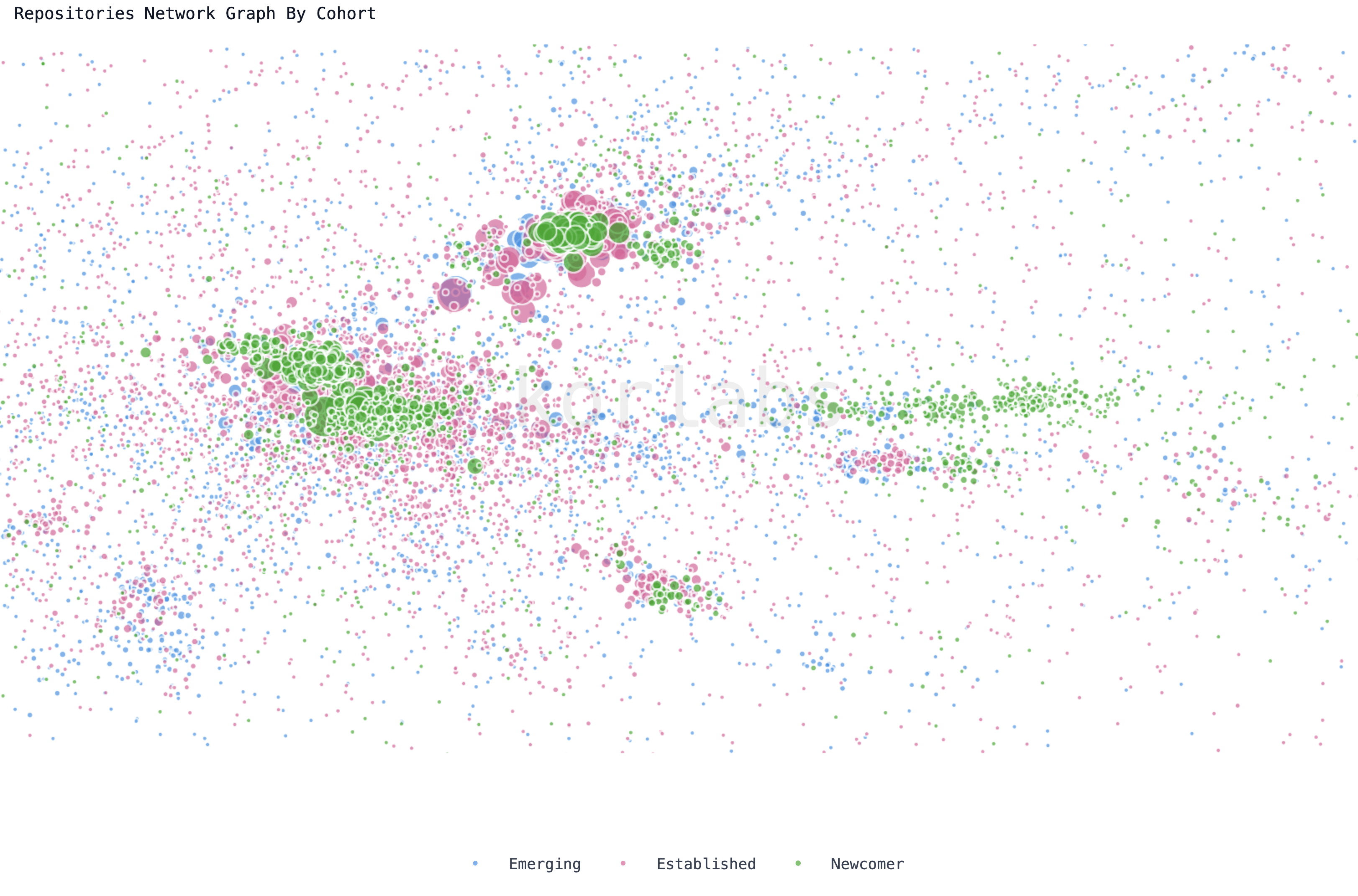
To examine how these cohorts interact, a developer collaboration network is constructed. Nodes represent individual developers, while edges connect pairs who have co-committed to at least one common repository. Edge weights correspond to the number of shared repositories, and the visualized graph is filtered to include only developers with at least two shared repositories in order to limit noise. Reported statistics, however, are computed using the one-repository threshold so as to preserve full-network coverage. The resulting network reveals a densely connected core alongside visible clustering patterns across lifecycle stages. Notably, emerging developers form a distinct intermediate cluster positioned between newcomers and established contributors.
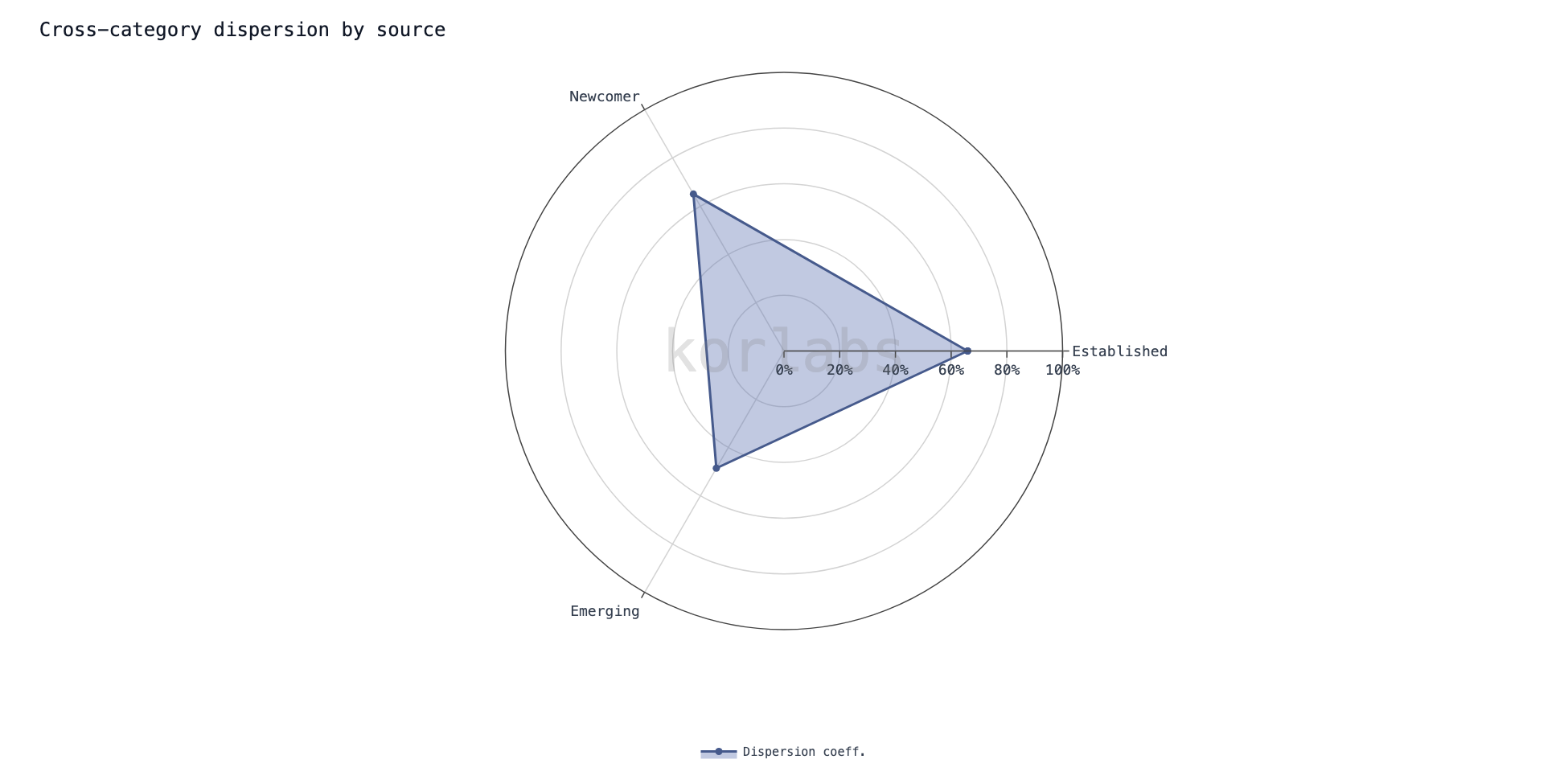
| Developer category | Dispersion |
|---|---|
| Newcomer | 0.646 |
| Emerging | 0.490 |
| Established | 0.661 |
Cross-category dispersion coefficients provide a quantitative measure of this mixing. Established developers exhibit the highest dispersion (0.661), indicating that a large share of their collaboration links connect to contributors from other lifecycle stages. Newcomers show similarly high dispersion (0.646), suggesting that entry often occurs in repositories already populated by experienced developers. By contrast, the Emerging cohort displays lower dispersion (0.490), implying relatively stronger within-stage clustering. This structure carries important implications for knowledge diffusion. Senior developers are not confined to closed clusters but are instead broadly distributed across mixed-tenure repositories, creating repeated opportunities for mentorship, code review, and architectural guidance. The ecosystem therefore appears not only to retain experienced contributors, but also to structurally couple them with newer entrants, embedding knowledge transfer directly within the collaboration graph.
Summary
This study develops a reproducible, lifecycle-based framework for measuring developer retention and structural dynamics within the Ethereum ecosystem. The analysis demonstrates that developer activity is positively associated with macro-level ecosystem expansion, reinforcing the structural link between technical participation and economic growth. While aggregate growth is attributed to the inflow of new participants, long-term ecosystem capacity is retention-driven: developers who persist become progressively more productive and form a stable technical core. Retention analysis reveals a clear tenure gradient. Newcomers exhibit the highest exit rates, emerging developers display materially improved persistence after crossing the 1.5-year threshold. Conditional survival increases with tenure, indicating that developer maturation is a central mechanism of ecosystem resilience. Additionally, developers who publicly link social profiles demonstrate moderately higher retention, suggesting that community embeddedness and reputational alignment correlate with persistence.
Collaboration network analysis further shows that experienced developers are highly integrated across lifecycle stages. Established contributors exhibit the highest cross-category dispersion, while newcomers also demonstrate strong cross-stage connectivity, suggesting onboarding occurs within mixed-tenure environments. Emerging developers display comparatively greater within-stage clustering. This structure implies embedded knowledge transfer, where senior contributors are structurally coupled with newer entrants, facilitating mentorship and reinforcing retention.
Overall, the findings suggest that ecosystem health is a product of both recruitment and maturation. Success depends on whether new entrants eventually occupy durable, high-contribution roles within the network. By shifting the focus from aggregate activity to lifecycle progression and collaboration dynamics, this framework provides a scalable toolkit for measuring the structural stability of open-source ecosystems.
Interested in more insights? Join the waitlist for early access.
Join Waitlist